Washminster

Washminster
Washminster
Showing posts with label NAO. Show all posts

Wednesday, 19 May 2021

National Audit Office (NAO)

The National Audit plays an important role in advising decision makers in Britain about concerns in the Government's decision making process. It is politically impartial and well respected. It can also inform citizens about its findings. I'm a big fan of its work.

Of course it will always upset some people. Governments can feel that it is always critical - which may not be a fair comment - but the role of the NAO is point out where things have gone wrong, or where the decision making process isn't as good as it could be. But that is the NAO's job - it provides information which MPs (and others) can use to hold decision makers to account.

Oppositions might also feel that the NAO could be more critical of Government. Again, this would be unfair - The NAO does the research - it the politicians whose job it is to draw conclusions about whether the Government is failing.

This week the NAO produced a paper called "Initial learning from the government's response to the COVID-19 Pandemic". It is informative - and gives links to specific NAO inquiries.

The Report is available here


Monday, 3 February 2014

Is "good government" possible?


Ronald Reagan once stated (actually I think he kept on saying it!) that "government is not the solution to our problem; government is the problem." It's a view that many people hold today. I have to say right from the start - it is not a view I share.

Yet we hear so much about cost overruns; corruption; blunders; if not sheer incompetence. It's not limited to a particular government; or even system of government - I subscribe to The Guardian (UK); Le Monde (France); New York Times (UK); and "European Voice" (EU). Very different systems are reported upon - but the stories are so familiar.

Is it a question of complexity? Our modern world is so complicated - that it may be impossible for any institutions to attempt to keep everything working at the same time. Some people argue that only unrestricted market forces can bring about the optimum results. Frankly, that seems to me to be complete rubbish. History is full of examples of the follies and disasters brought about by unregulated markets. If you want scandals, swindles; abuse of power - read any economic history. I remember reading Professor Galbraith's argument that modern economic history demonstrates a recurring cycle - scandal & crashes (from the South Sea Bubble to...applying his thesis - the Banking crisis of recent years), followed by government intervention to save the system and regulations to stop the same thing happening again - followed inevitably by demands for the relaxing of regulations - leading to new scandals and crashes. Public officials are (rightly) held to much higher ethical standards than business requires.

Certainly complexity is one of a (series) of problems - but can it explain the role of abuse of power and scandal?

I think that we have to accept the first part of Lord Acton's dictum that "POWER TENDS TO CORRUPT, absolute power corrupts absolutely." There are various ways that systems can seek to temper the downside of Human Nature.

Constitutional Law has its role to play. A constitution can set limits on power, and rules which invalidate actions which breach the Constitution. Most states have a single document which sets out the main rules. However that single document is not the complete statement of constitutional law. The US Constitution has been interpreted and applied by the Courts, particularly the US Supreme Court. Constitutional conventions can exist. Until Franklin Roosevelt ran for a third term it was a convention that Presidents served no more than two terms. He broke it, and a constitutional amendment was subsequently passed. Legal remedies may work (but may not be safe in the hands of clever lawyers), but sometimes other pressures encourage compliance. "Conventions" in the UK play this role - they are not legally enforceable, but constitutional actors regard themselves bound by the convention. They are effective when they mean that the cost of breaking the convention outweighs any short term advantage. The Queen could refuse to give the Royal Assent to a bill passed by Parliament (was she tempted when the Hunting Bill was passed?) - but the cost would be the loss of the unchallenged role that the Crown plays.

Ethics rules can play a role. While we might complain about our current politicians being a bunch of rogues - they are actually 'cleaner' than most generations in history. Many scandals of the last 40 years involve behaviour that, thanks to ethics rules, are forbidden - previously these practices were regarded as normal political behaviour.

"Accountability" is a requirement that can reduce scandal and show up incompetence. There is an important role for investigative committees - in Congress committees play an important role in questioning decisions; and requiring officials and others to justify their actions. Within constraints the Departmental Select Committees in the House of Commons can do the same. They are aided by professional support bodies - the GAO (Government Accountability Office) in the USA and the NAO (National Audit Office) in the UK.

In England MPs and Councillors can ask questions of officials carrying out policies; and the decision makers who have adopted policies - and demand answers. Sometimes the press can play a role in uncovering sharp practices and incompetence. There are also various organisations seeking to hold decision makers to account - such as the USA's Common Cause.

We don't live in a perfect world - and Human Nature can be deeply flawed - but in democracies - where power belongs to its citizens - we each have a responsibility (to ourselves and to others) to see that power is accountable to us.

Friday, 19 April 2013

Does it matter who we vote for?


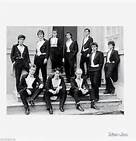
I care less and less about which members of the political elite hold key offices. Does it really make any difference as to whether its the Old Etonian Boy's Club (Cameron et al)? privately educated MPs [ALL parties - 54% of Conservative MPs attended fee paying schools, compared with 40% of Liberal Democrat MPs, and 15% of Labour MPs.]? or the extremely wealthy (Essential if you want to be a Senator; Congressman and to an increasing extent an MP or Peer)?

[Well yes, if you believe in a representative democracy]

But my point isn't to decry the "pay to play" principle; or to deny that there are vastly different policies being put forward by the different parties - but to consider the implications of an important point made by Lord Acton in 1887.

 "Power tends to corrupt, and absolute power corrupts absolutely."

Sadly, Acton's words are true. There is a tendency for power to corrupt - perhaps not in its grossest form - but subtly, by desensitising people once they achieve power. Recent history is full of examples - the expenses scandal at Westminster is classic. Decent, hard-working, dedicated people ended up making claims which were outrageous - but their time in power had desensitised them. "Group-think" took over. Benefits became entitlements - and the public purse dipped into in a way they'd have condemned before they entered the Westminster village. We've read in the papers over recent months of how people thrust into power - whether they be performers or DJs; or politicians - abused their positions to claim sexual victims. Senator Fulbright spoke of the "arrogance of power" that can be shown by nations - but it can often be shown by individuals.

One of the defining demands of 'Extreme-Conservatives' is for less regulation. Cast off regulation and everyone would be better off. Their little experiment now has its results - the banking crisis; Enron; the horsemeat scandal...

We can't alter human nature - but we can put in safeguards to lessen the change of power corrupting. The Americans when they drew up their Constitution were keen to insert "checks and balances".
Montesquieu proposed 'separation of powers' as one way to lessen the likelihood of tyranny developing. Even medieval Kings required 'weights and measures' laws to stamp on the 'rip-off merchants.

Requiring greater accountability from those who exercise power is the only way to take on our human failings. Judicial Review in the UK has developed to challenge - not the substance of decisions - but the way they've been taken. A decision made by a public official who has a financial interest in the result of that decision, will be declared invalid. Decisions can be challenged and struck down where there is irrationality; or irrelevant considerations have been taken into account.

At Westminster and in Congress - our representatives can investigate and question how decision makers have acted. The National Audit Office [NAO] and the Government Accountability Office [GAO] can undertake professional, in-depth investigations and report their findings to our representatives. In Britain MPs and Peers can ask oral questions during question times - and grill Ministers in committee.

Freedom of Information laws can also shed sunlight upon decisions made - allowing questions to be asked.

It does matter who we vote for - because our representatives can call decision makers to account. The issue for us as voters is whether our Parliament/Parlement/Congress has the powers; tools and commitment to holding decision makers to account.

Tuesday, 3 April 2012

Holding to Account


Yesterday, the Independent newspaper published an article about Margaret Hodge, the Chair of the Public Accounts Committee. It is one of the oldest committees currently in existence, and has over many years been the major committee for overseeing the use of public money. It has the National Audit Office report direct to it. By convention, the Chair is a member of the main Opposition party.


The article describes the role and work of the PAC, but the focus of the article is on Ms Hodge’s to hold senior civil servants to account before Parliament. Of course that has faced some resistance, due to the doctrine of individual ministerial responsibility. That doctrine has Ministers responsible before Parliament for the actions of the Departments they head.

Fans of “Yes, Minister”, will no doubt applaud Ms Hodge’s efforts – with its portrayal of hapless ministers constantly outwitted by cunning and clever civil servants. The reality is somewhat different.


The article can be accessed here.

Tuesday, 16 August 2011

Improving the quality of scrutiny

Yesterday I mentioned the work of the Congressional Research Service (CRS). Along with the CBO (Congressional Budget Office) and the GAO (Government Accountability Office), they provide a service enabling members of both Houses of Congress to improve the quality of their scrutiny - a key role for legislators.

In the UK we have the House of Commons and House of Lords Libraries. The first is the best resourced of the two - and yet its counterpart in Congress - provides an excellent service to legislators. It's reports (Research Papers and Standard Notes) are publicly available here. In addition they provide an individual service to MPs - answering questions and providing specific research. The House of Lords Library is a smaller operation. It's Library Notes can be accessed here.

The National Audit Office carries out similar functions to the GAO. A description of their work can be found on DirectGov. "The National Audit Office works on behalf of Parliament and the taxpayer to hold government to account for the use of public money and to help public services improve performance. The National Audit Office is independent of government and has comprehensive statutory rights of access to the bodies it audits." It works specifically with the Public Accounts Committee, but its reports are an invaluable aid for other select committees. The reports are available here.

Select Committees and Public Bill Committees are assisted by the Scrutiny Unit, which consists of a small number of specialists. They are also useful in advising committees about external sources of specialist advice. Their reports can be accessed here.

The reports mentioned in this post are of course important for the work of Parliament and Congress - but they are publicly available - and I have found them to be useful for background reading - and for specific issues which I am researching. They can be very useful tools if you are a student, researcher, or wish to be one step ahead of others in your knowledge of particular subjects.