Washminster

Washminster
Washminster
Showing posts with label Parliamentary Questions. Show all posts

Friday, 6 January 2017

Following the House of Commons (particularly Oral Questions)


The Commons Business App can be found in the AppStore as "Commons Order Papers" - you can download for each sitting day the business papers for the day ahead. The one for next Monday is available now (we are currently in a recess - normally the papers are only available after the previous day's business has finished.

Part I is 'Business Today' - click on ''Business Today: Chamber" - that has all the oral questions set down for that day. Not all will be asked, when time runs out, remaining questions get only a written answer.
Part II is 'Future Business'

The Parliamentary website is www.parliament.uk

Follow the following tabs -

- Parliamentary business
  - Publications & Records
    - House of Commons business papers
      - Question Book (from this page you can download the PDF of dates and deadlines - direct link http://www.parliament.uk/documents/commons-table-office/Oral-questions-rota.pdf)
        - Questions for oral answer on a future day
(This comes out every day and lists questions up to the third parliamentary day from the date of issue.

Hansard is also available on the parliamentary website
- Parliamentary business
  - Publications & records
    - View & search Commons & Lords Hansards - direct link https://hansard.parliament.uk


Monday, 18 July 2016

Today in The Lords

Last week turned out to be a little busier than expected. So no predictions rom me - but you might be Interested in the first three questions in the Lords this afternoon -


Baroness Mobarik to ask Her Majesty’s Government what steps they are taking to bring together all communities following the result of the European Union referendum.
*Baroness Deech to ask Her Majesty’s Government whether they plan to clarify the conditions for the exercise of the Royal Prerogative.
*Lord Tyler to ask Her Majesty’s Government what assessment they have made of the stage, or stages, at which Parliament’s authority should be sought as part of the negotiation for leaving the European Union. 

Friday, 31 July 2015

Scrutiny


The paper I presented at Wroxton was called, ""Battles on Many Fronts: Education Scrutiny and Debate in the Twenty-First Century House of Commons". It was presented during a panel on "Westminster in Context" which also discussed papers by Meg Russell & Ruxandra Serban; Mark Shephard;  and Louise Thompson & Cristina Leston-Bandeira.

The paper describes the various opportunities open for parliamentary scrutiny of Education - and includes a table listing and giving examples of these. It looked in more detail at the scrutiny in the Education Select Committee and at the Public Bill Committee which undertook the committee stage of the Education and Adoption Bill. A further table was produced showing who had participated in Education Questions (which are held at 2.30pm on the Monday of every 5th Parliamentary week.

I'm happy to supply a copy of the paper, just email me.

Friday, 4 October 2013

The Right Question

 
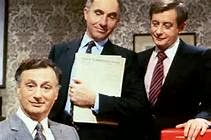
There's a wonderful line (well let's be honest about it, there are a host of superb lines) in "Yes Minister" - one of my favourites is a comment from a civil servant -

"Ministers are ignorant not because we do not give them the right answers but because they do not ask us the right questions."

Asking the right question is key to getting answers. Watching Select Committees at Westminster or Congressional Committees in Washington provide many examples of questioning - as does observing lawyers cross-examining in Court. It is well worth watching questioners and reflecting on their questions - which can easily be dodged? - and which get to the heart of the matter?

Washminster would welcome your observations.

Friday, 19 April 2013

Does it matter who we vote for?


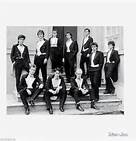
I care less and less about which members of the political elite hold key offices. Does it really make any difference as to whether its the Old Etonian Boy's Club (Cameron et al)? privately educated MPs [ALL parties - 54% of Conservative MPs attended fee paying schools, compared with 40% of Liberal Democrat MPs, and 15% of Labour MPs.]? or the extremely wealthy (Essential if you want to be a Senator; Congressman and to an increasing extent an MP or Peer)?

[Well yes, if you believe in a representative democracy]

But my point isn't to decry the "pay to play" principle; or to deny that there are vastly different policies being put forward by the different parties - but to consider the implications of an important point made by Lord Acton in 1887.

 "Power tends to corrupt, and absolute power corrupts absolutely."

Sadly, Acton's words are true. There is a tendency for power to corrupt - perhaps not in its grossest form - but subtly, by desensitising people once they achieve power. Recent history is full of examples - the expenses scandal at Westminster is classic. Decent, hard-working, dedicated people ended up making claims which were outrageous - but their time in power had desensitised them. "Group-think" took over. Benefits became entitlements - and the public purse dipped into in a way they'd have condemned before they entered the Westminster village. We've read in the papers over recent months of how people thrust into power - whether they be performers or DJs; or politicians - abused their positions to claim sexual victims. Senator Fulbright spoke of the "arrogance of power" that can be shown by nations - but it can often be shown by individuals.

One of the defining demands of 'Extreme-Conservatives' is for less regulation. Cast off regulation and everyone would be better off. Their little experiment now has its results - the banking crisis; Enron; the horsemeat scandal...

We can't alter human nature - but we can put in safeguards to lessen the change of power corrupting. The Americans when they drew up their Constitution were keen to insert "checks and balances".
Montesquieu proposed 'separation of powers' as one way to lessen the likelihood of tyranny developing. Even medieval Kings required 'weights and measures' laws to stamp on the 'rip-off merchants.

Requiring greater accountability from those who exercise power is the only way to take on our human failings. Judicial Review in the UK has developed to challenge - not the substance of decisions - but the way they've been taken. A decision made by a public official who has a financial interest in the result of that decision, will be declared invalid. Decisions can be challenged and struck down where there is irrationality; or irrelevant considerations have been taken into account.

At Westminster and in Congress - our representatives can investigate and question how decision makers have acted. The National Audit Office [NAO] and the Government Accountability Office [GAO] can undertake professional, in-depth investigations and report their findings to our representatives. In Britain MPs and Peers can ask oral questions during question times - and grill Ministers in committee.

Freedom of Information laws can also shed sunlight upon decisions made - allowing questions to be asked.

It does matter who we vote for - because our representatives can call decision makers to account. The issue for us as voters is whether our Parliament/Parlement/Congress has the powers; tools and commitment to holding decision makers to account.

Friday, 9 December 2011

How much does a Parliamentary Question cost?

As a former Organisation & Methods Analyst, I approach giving a figure with a certain amount of trepidation. Costing involves calculations based on certain assumptions. It needs to take into account the costs of the individual(s) involved's time to do the work and the costs of the infrastructure needed for the task to be accomplished. I used to be horrified when colleagues would propose "savings" of millions of pounds based on eliminating a handful of steps in a procedure carried out in all our branches. The savings were illusory - the employees worked the same hours and received the same annual income - AND new costs might arise from not doing those steps, or from new steps or procedures which might become necessary. Risks of things going wrong might arise - but the bland claim of "savings" was still made. (and when I was a Councillor, I found that the same thing happened - claims of savings were made - but the inevitable costs (and few of them were truly 'unforeseeable consequences') were not mentioned.

So do take with a pinch of salt the claims that the average cost of written answers is £149 and £410 for an oral question. The figures include an element which would be paid whether there were few or many questions.

But, however the cost is calculated, it is true that dealing with and answering questions is expensive. Whoever said that democracy and accountability comes cheaply. We would be better concentrating upon the quality (in terms of usefulness of the information provided and scrutiny achieved) than on relatively meaningless headline "costs".

Tuesday, 14 September 2010

Independent Parliamentary Standards Authority Committee

A number of written questions have been put down - and the answers are attached
Mr Liddell-Grainger: To ask the hon. Member for Broxbourne, representing the Speaker's Committee for the Independent Parliamentary Standards Authority, how many staff are employed by the Independent Parliamentary Standards Authority (IPSA) to work on public relations; what the total cost to the public purse of employing staff for public relations work has been since it began operation; and which (a) agencies and (b) Government departments have provided staff to undertake such work for IPSA in that period.

Mr Charles Walker: IPSA currently employs two members of staff in its communications team. One person has responsibility for external communications, including the media, and one person has responsibility for internal communications and website management. A director of communications will soon be joining IPSA to provide strategic oversight and direction to its communications activities.

Since IPSA began operations on 7 May 2010, the total spend on employing staff for all aspects of communications activities has been £37,840. This includes the associated expenditure of national insurance and employer pension contributions and VAT on contracted staff supplied by GovGap.


No Government Departments have provided staff to IPSA's communication team in this period. IPSA received communications advice and support from Apex Communications during the initial phase of operation as it was recruiting and establishing its in-house communication team, but does not any more.

Mr Liddell-Grainger: To ask what the (a) value and (b) length of contract is for the computer system used by the Independent Parliamentary Standards Authority; and with which organisation the contract is made.

Mr Charles Walker: The Contract is with Calyx (UK) Ltd. The length of the contract is five years from February 2010.

The scope of the contract covers infrastructure and enterprise software support as follows:
Infrastructure support covers:
Server hardware, desktops and laptops, network hardware, office infrastructure, firewalls, anti-virus, web proxy and hosting services, WAN link, security solutions, email, telephony.

Enterprise software support covers:
Software support for financial accounting, online expense system, payroll, HR, customer management system.

The annual value of the contract including both infrastructure and enterprise support is £194,000 in the first year and £252,000 per year in subsequent years.

Glenda Jackson: To ask how many (a) full-time and (b) part-time staff work for the Independent Parliamentary Standards Authority; and if the Authority will publish its standard employment contract for staff.

Mr Charles Walker: As of 19 July 2010, IPSA has 83 staff of whom:
(a) 82 are full-time; and
(b) one part-time.
IPSA will send the standard employment contract template to the hon. Member.

Mr Liddell-Grainger: To ask how many full-time staff each department of the Independent Parliamentary Standards Authority employs; and what the staff turnover has been in each week since 1 May 2010.

Mr Charles Walker: As of 27 July 2010, there are 78 full-time members of staff working at IPSA, broken down as follows.
 (Unit / Permanent / Temporary
Chief Executive's Unit   1   1
Operations   16   35
Finance and Corporate Services   4   11
Policy, Communications and Secretariat   6   4

There has been no turnover in our permanent staff since 1 May 2010. Due to the nature of temporary employment, there are no figures available for turnover in temporary staff.

Mr Liddell-Grainger: To ask if he will list each of the changes made to the rules and procedures implemented by the Independent Parliamentary Standards Authority since its inception.

Mr Charles Walker: A small number of changes to the MPs' Expenses Scheme were introduced in July 2010, following the consultation required by the Parliamentary Standards Act. The changes are detailed
in "The MPs' Expenses Scheme: Second Edition", which has been made available to all MPs and is available on: http://www.parliamentarystandards.org.uk/

In addition since 7 May 2010, IPSA has introduced a number of changes to procedures to help MPs, including:
- the introduction of a £4,000 advance for MPs and advance payments on production of invoices for a number of high cost items;
- a facility for proxies to process expenses for MPs who are not their employer;
- the extension of the 90 day deadline for claims until 1 October 2010;
- the introduction of the "grace period" until early September, under which claims submitted over the summer which are outside the rules will not be published.

These and other changes have been documented in the IPSA MPs' Bulletin, which is sent to all MPs each week and available on: http://www.parliamentarystandards.org.uk/

Ann McKechin: To ask how many refusals of claims had been communicated to hon. Members by means of (a) the Independent Parliamentary Standards Authority website and (b) by email for the period to 7 September 2010.

Mr Charles Walker: Where a claim is refused in full or in part, MPs are provided with summary details of the refusal via the online system under heading 'Refusals'. By close of business on 9 September, 25,872 claim lines had been approved and 1,574 claim lines had been refused.

Currently refusals are not communicated via e-mail.

Ann McKechin: To ask what proportion of claim refusal decisions communicated to hon. Members by 7 September 2010 were accompanied by accurate written accounts of the reasons for which claims had been refused.

Mr Charles Walker: IPSA does not currently communicate refusal decisions by e-mail. MPs are provided with summary details of the refusal via the online system under heading 'Refusals'. IPSA is developing a process to provide MPs with an automated e-mail alert informing them of the status of claims and to enable Members to view detailed refusal reasons.

Ann McKechin: To ask how many Independent Parliamentary Standards Authority staff are authorised to make claim refusal decisions on claims; and what procedures are followed in circumstances in which such staff make an error in communicating such a refusal decision to an hon. Member.
Mr Charles Walker: Currently seven senior members of IPSA staff are able to make final decisions on MPs expense claims. Where a claim is refused, MPs are able to request a review within 14 days on the grounds that the rules have been applied inconsistently or that IPSA has made an administrative error. If the review finds that the claim should have been paid, the claim is revisited and processed. Individual members of staff are informed of the review and further training is provided where required.

Ann McKechin: To ask how many documents submitted to the Independent Parliamentary Standards Authority by hon. Members in support of their claims had been lost in the period to 30 August 2010.

Mr Charles Walker: IPSA does not record numbers of documents which are thought to have been lost.

Ann McKechin: To ask what procedures are followed by the Independent Parliamentary Standards Authority to record the receipt of supporting documents submitted in relation to claims made by hon. Members; and whether the Independent Parliamentary Standards Authority plans to review those procedures.

Mr Charles Walker: Post deposited in the drop box in Portcullis House is collected by hand and, together with the mail posted directly to IPSA, is sorted every morning. MPs' expense claims and accompanying receipts are placed in individual, transparent pockets with all staples and paperclips removed. Each claim is then logged using documentation tracking software and scanned directly to the online expenses system for validation. The documents are then filed immediately to Members' records. Currently all post received is sorted, logged, scanned and filed within one day. All IPSA processes during this initial phase of operations are kept under review.

Mr Meacher: To ask how many and what proportion of telephone calls to the Independent Parliamentary Standards Authority from hon. Members were not answered within 15 minutes in the latest period for which figures are available; and if he will make a statement.

Mr Charles Walker: It is not possible to provide the requested statistics at this time. IPSA intends to provide MPs with information on its performance against its call handling and other service targets shortly.