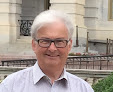
One of the greatest Supreme Court Justices was Louis Brandeis. He was particularly known for his defences of the freedoms of speech and privacy.
William O Douglas, the longest-serving justice in the history of the Supreme Court, said of him -
“Brandeis was a militant crusader for social justice whoever his opponent might be. He was dangerous not only because of his brilliance, his arithmetic, his courage. He was dangerous because he was incorruptible. . . [and] the fears of the Establishment were greater because Brandeis was the first Jew to be named to the Court."
Melvin Urofsky, had has previously written extensively on Brandeis has recently published "Louis D Brandeis: A Life". He was interviwed about the subject of his book on C-SPAN's "Q&A"
Thursday, 12 November 2009
Wednesday, 11 November 2009
The Legislative Process
 How does a bill become a law? The Parliament website now has a very useful guide to the process - illustrated by examples and linked to all the relevant language used. I regard it as a very informative guide - useful for students of constitutional law and politics - as well as those who want to gain a better understanding of the legislative process.
The guide can be accessed here.
Your comments on this resource would be much appreciated by the parliamentary authorities - and I would urge you to take part in the online survey.


Tuesday, 10 November 2009
The Spy at Bletchley Park
 Winston Churchill once described the people who worked during World War Two at Bletchley Park as "the geese that laid the golden eggs - but never cackled". This remained until the mid 1970s one of the best kept secrets of all time. Researchers have discovered couples who had worked at the codebreaking centre - who honoured the instruction not to reveal what they had done, to the extent that they never even talked about it to each other - and so did not know they they shared a common past.
But there was a Russian Spy who worked there. John Cairncross - the "fifth man" in the Cambridge spy ring. He worked in Hut 3 (the main reporting centre for all Enigma on German Army and Air Force communications). He had previously been private secretary to Lord Hankey, a member of the War Cabinet. Michael Smith described his esponiage in 'Station X'. - "Cairncross smuggled decrypts that were due to be destroyed out of Hut 3 in his trousers, transferring them to his bag at the (Bletchley) railway station before going on to London to meet his KGB contact"
Cairncross passed information which has been credited with helping the Russians to win the Battle of Kursk. A sanitised version had been supplied by the British to the Russians, but the source had been disguised.
The Independent's Obituary of Cairncross can be read here.
Bletchley Park contains a well stocked bookshop, which sells a number of books and monographs about the history of the codebreaking centre.
Monday, 9 November 2009
The Special Relationship
On Saturday I went with Bob Carr, former Member of the House of Representatives from Michigan, to Bletchley Park - the Codebreaking centre which was vital to the conduct of the Second World War - and was the place where the first programmable computer was constructed.
For more information on Bletchley Park press here.
For more information on Bletchley Park press here.
Sunday, 8 November 2009
John Brademas Center for the Study of Congress
 Another academic centre named for a leading congressman, the John Brademas Center for the Study of Congress , provides access to important research work on Congress. It is based at New York University’s Robert F. Wagner Graduate School of Public Service.
John Brademas served in Congress from 1959-1981. He was House Majority Whip in the period 1977-81. As well as being a congressman, he had a passion for education and played a key role in the development of many educational bodies within the USA. He co-sponsored the legislation establishing the National Endowment for the Arts and the National Endowment for the Humanities. Brademas was the first Greek-American member of Congress.
The Center, of which John Brademas is President Emeritus, has been involved in a two-year “Congress and the Future Project" which resulted in a bipartisan 'White Paper' which is available here entitled "Looking to the Future: The Challenge to Congress".
The website also contains transcripts of interviews with a number of retiring members of Congress. The purpose of the Center's Reflection Project is "to establish a public record of the first-person accounts, opinions, anecdotes and reflections of Members who retire from office each term". These transcripts can be accessed here.
Subscribe to:
Posts (Atom)